


The sci-fi fantasy behind the Artificial State, and why it can still be dismantled
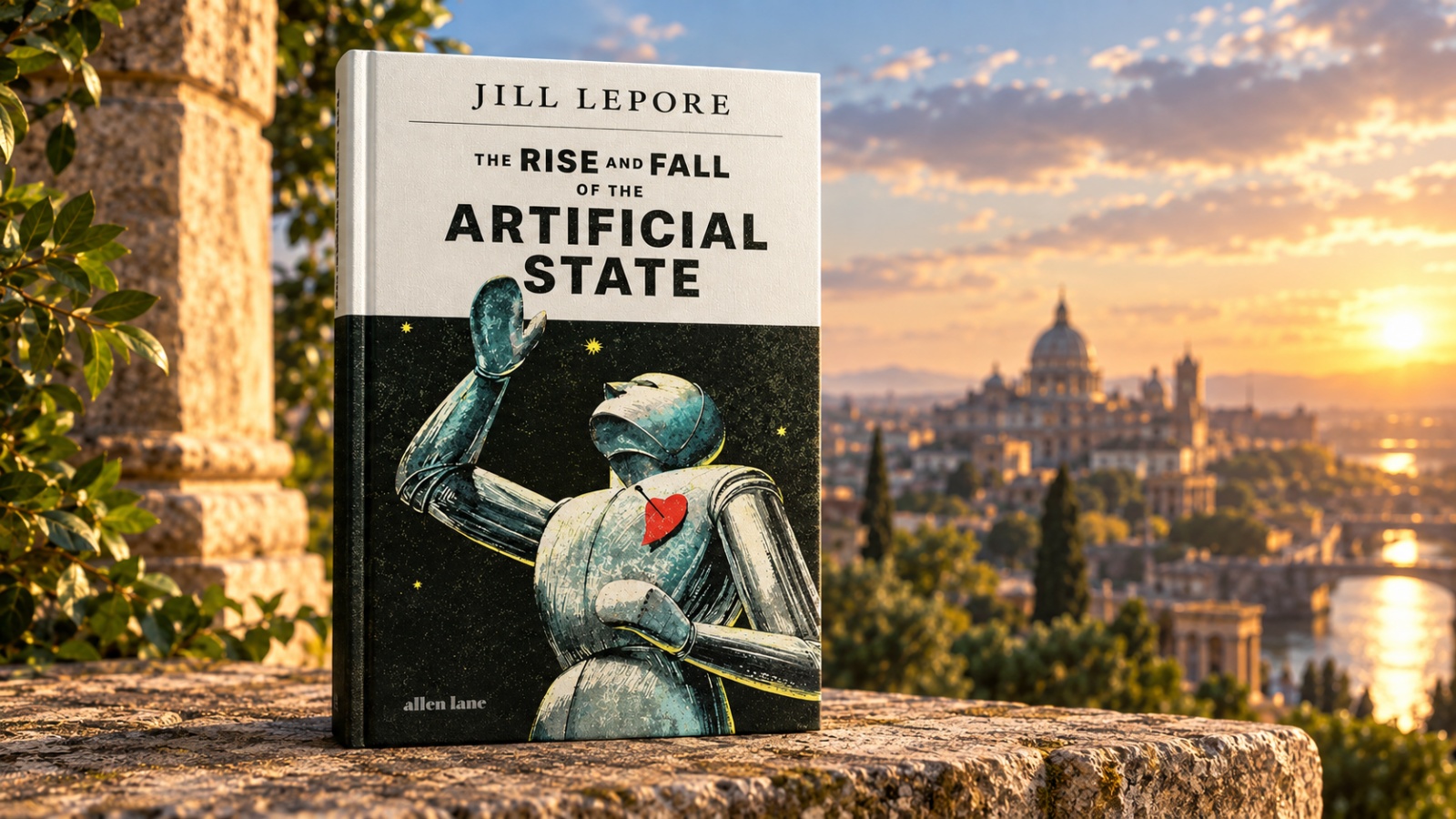
It is tempting to call Jill Lepore’s The Rise and Fall of the Artificial State a book of our times. It arrives as Silicon Valley’s power players belatedly admit that artificial intelligence needs reining in.
Lepore, the David Woods Kemper ’41 Professor of American History at Harvard, is best known for These Truths: A History of the United States, which won her a Pulitzer this year.
In her new book, she turns that same historical rigour on the world of machines threatening to reshape (or even replace) human life.
Archaeology of a fantasy
Despite being written by one of the finest historians, this is not strictly a work of history. The 336-page book splits into two halves: Government by Machine, which traces technology’s growing grip on governance and the rise of a small technocratic elite she dubs “Technology Inc.,” and What Robots Want, which examines how science fiction shaped the rise of what she calls the “Artificial State.” As she puts it in the preface, the book is an “archaeology” of the fantasy of humans, machines, and the Earth.
Lepore draws heavily on Hannah Arendt’s 1951 The Origins of Totalitarianism, which warned decades ago that machines could render humans superfluous—politically under totalitarianism, technologically under automation.
With Silicon Valley clearly in her sights, Lepore describes the Artificial State as a dream of escaping not just government, but human connection itself—a project driven by a handful of ultra-wealthy tech figures reportedly hoping to upload their consciousness after death.
Sci-fi as blueprint
The book’s second half argues Artificial State has roots in the science fiction of the 1950s and ’60s, the very era when many current tech CEOs were coming of age.
Writers such as Asimov loom large, but Lepore argues that most tech leaders absorbed the genre’s imagery while missing its warnings.
Google reportedly told employees to pursue “science fiction–sounding” ideas, and Peter Thiel has described his investment philosophy in similarly literal terms.
Lepore’s sharpest jab: Elon Musk, she suggests, missed the anti-apartheid subtext of The Hitchhiker’s Guide to the Galaxy, taking away only a lesson about asking the right question.
The result, in her view, is an Artificial State built by accident rather than design — “poorly designed and badly built,” and never fated to exist in the first place.
Also Read | 5 must-read sci-fi novels that made the leap to screen
Despite this bleak diagnosis, Lepore is not a pessimist. Because the Artificial State is a construct, neither alive, nor truly indestructible, she argues it is still possible to take it apart.
She places her faith in ordinary democratic will as people grow wary of technology’s reach into daily life and governance.
The verdict
Lepore’s moral seriousness is evident. Her prose can be dense, and she often assumes readers know her references (word to the wise: keep Wikipedia handy). The notes section (over a third of the book!) might test even the most devoted reader.
Still, this is a clear-eyed reckoning rather than a doomsday tract. It is not an easy read, but an essential one for anyone unsettled by the pace of the AI wave. The book’s closing words say it plainly: “Ask not the machines.”
Altman, Musk, Zuckerberg, and company would do well to listen.
The Rise and Fall of the Artificial State by Jill Lepore
Allen Lane
336 pages
Rs 1299
© IE Online Media Services Pvt Ltd
0 Comments